Dog11 min read
Dog Grooming at Home: Essential Tips for Beginners
By SerZu Team·April 1, 2026
Professional grooming can cost $50-$150 per session. While some breeds require professional attention, most basic grooming can be done at home with the right tools and techniques. Here's your complete guide.
Why Regular Grooming Matters
Grooming isn't just about looks. Regular grooming helps you:
- Detect skin issues, lumps, or parasites early
- Prevent painful matting and tangles
- Reduce shedding and allergens in your home
- Maintain healthy skin and coat
- Bond with your dog through gentle handling
Essential Grooming Tools
Brushes and Combs - **Slicker brush**: Best for removing tangles and loose fur in medium-to-long coats - **Bristle brush**: Good for short-haired breeds and finishing - **Undercoat rake**: Essential for double-coated breeds (Huskies, German Shepherds, Golden Retrievers) - **Dematting comb**: For working through stubborn mats
Bathing Supplies - **Dog-specific shampoo**: Never use human shampoo — the pH is wrong for dog skin - **Conditioner**: Helpful for long-coated breeds - **Absorbent towels**: Microfiber works best - **Non-slip mat**: For the tub or shower floor
Nail Care - **Guillotine clippers**: Best for small to medium dogs - **Plier-style clippers**: Better for large breeds with thick nails - **Nail grinder**: The Dremel approach — slower but less risk of cutting the quick - **Styptic powder**: In case you cut too short (it happens)
Ear and Dental Care - **Ear cleaner**: Veterinary-grade ear cleaning solution - **Cotton balls**: For cleaning ears (never use cotton swabs) - **Dog toothbrush and toothpaste**: Enzymatic dog toothpaste is best
Brushing Guide by Coat Type
Short Coat (Beagle, Boxer, Pit Bull) - Brush once a week with a bristle brush - Use a rubber curry brush during shedding season - Quick and easy maintenance
Medium Coat (Golden Retriever, Australian Shepherd) - Brush 2-3 times per week with a slicker brush - Use an undercoat rake during seasonal blows - Pay attention to behind the ears, chest, and tail
Long Coat (Shih Tzu, Yorkshire Terrier, Afghan Hound) - Brush daily to prevent matting - Work in sections, starting from the ends and working toward the skin - Use detangling spray for stubborn knots
Double Coat (Husky, Malamute, Samoyed) - Brush 2-3 times per week, daily during shedding season - NEVER shave a double coat — it doesn't grow back correctly and removes their temperature regulation - Undercoat rake is your best friend
Bathing Basics
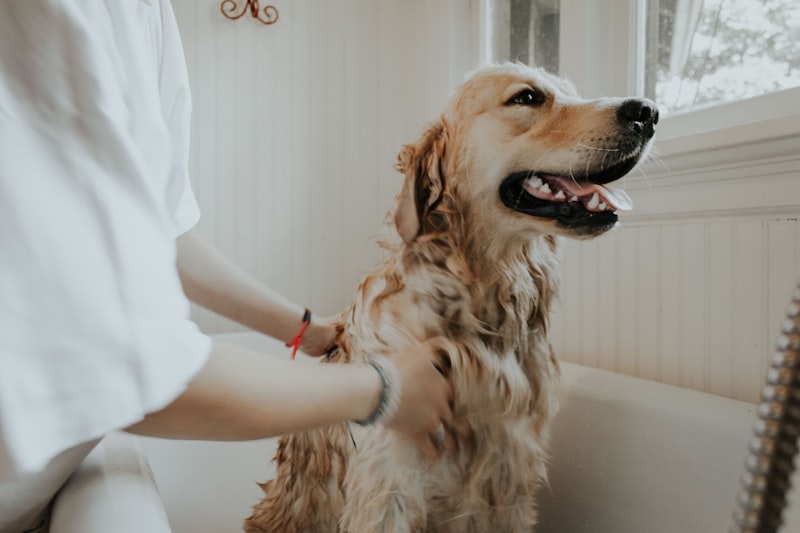
How Often Most dogs need a bath every 4-8 weeks. Overbathing strips natural oils and can cause dry, itchy skin. Exceptions include dogs who roll in something unpleasant or have skin conditions requiring medicated baths.
The Process 1. Brush thoroughly before bathing to remove loose fur and tangles 2. Use lukewarm water — not hot, not cold 3. Wet your dog completely, avoiding eyes and ears 4. Apply shampoo and work into a lather, massaging the skin 5. Rinse thoroughly — soap residue causes irritation 6. Apply conditioner if needed, then rinse again 7. Towel dry, then use a blow dryer on low/cool if your dog tolerates it
Nail Trimming
This is the grooming task most owners fear. Here's how to do it safely:
Preparation - Handle your dog's paws regularly between trims so they're comfortable - Have treats ready for positive reinforcement - Identify the quick (the pink part inside the nail with blood supply) - On dark nails, trim small amounts at a time
Technique 1. Hold the paw firmly but gently 2. Cut at a 45-degree angle, below the quick 3. Take thin slices if you're unsure where the quick is 4. If you cut the quick, apply styptic powder and stay calm 5. Trim every 2-4 weeks to keep nails at a healthy length
Ear Cleaning
Check ears weekly for redness, odor, or discharge. To clean:
- Squirt ear cleaning solution into the ear canal
- Massage the base of the ear for 30 seconds
- Let your dog shake (stand back!)
- Wipe the visible ear flap with a cotton ball
- Never insert anything into the ear canal
When to See a Professional
Some situations call for professional help:
- Severely matted coats that are painful to brush out
- Breed-specific haircuts (Poodles, Bichons, Schnauzers)
- Dogs with aggression or extreme anxiety during grooming
- Anal gland expression
- Any skin condition you're unsure about
With practice, home grooming becomes a bonding routine you and your dog both enjoy. Start slow, be patient, and always make it a positive experience with plenty of treats and praise.